Rachel Lawson on Dr. Rashayla Marie Brown’s Keynote Presentation at Chicago Women’s History Conference 2026
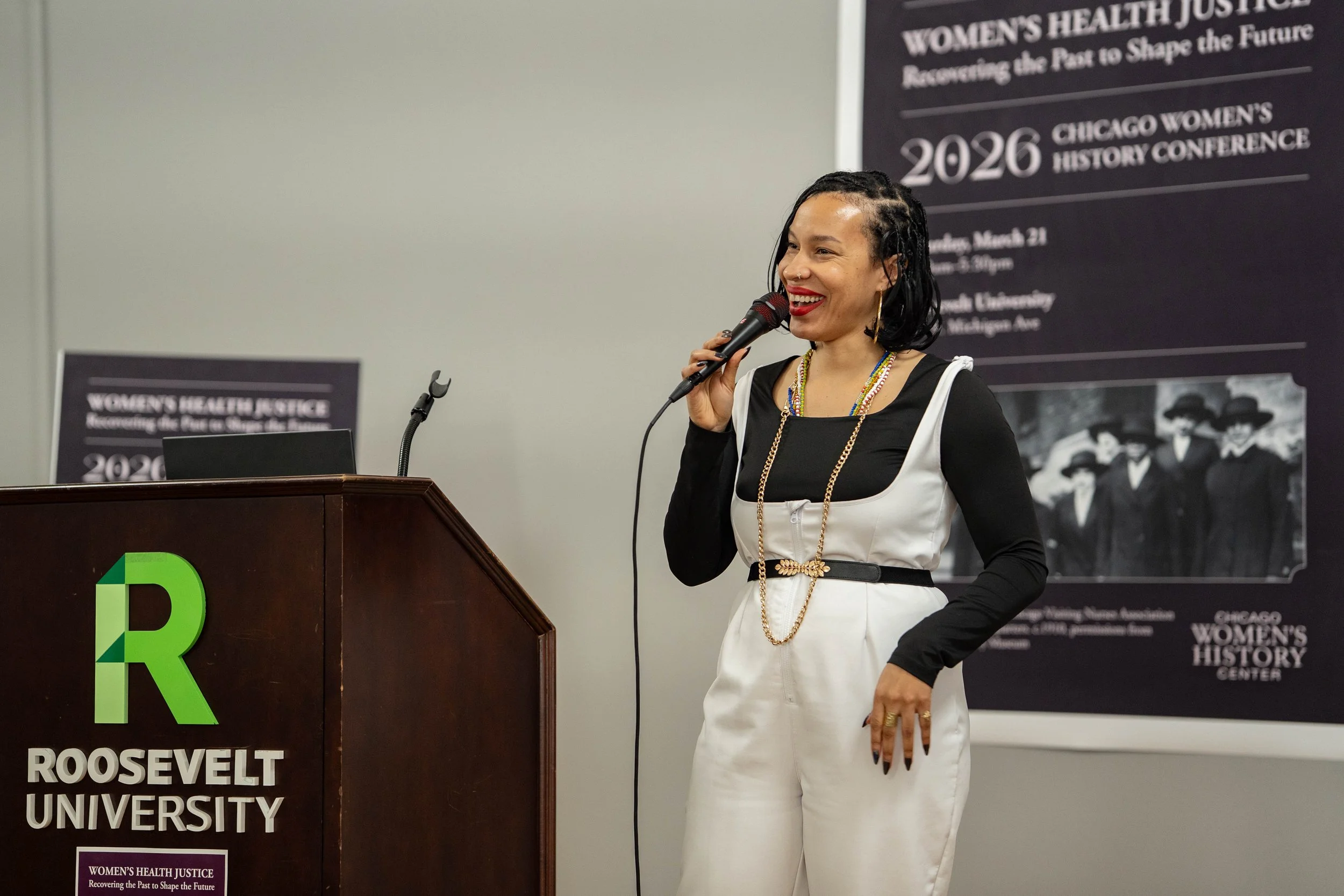
Keynote Presenter: Dr. Rashayla Marie Brown, Photo credit Essence Richardson
The 2026 Chicago Women’s History Conference opened with a presentation by Rashayla Marie Brown, also known as Dr. RMB, discussing what the conference’s theme of health justice meant to her. The first thing she did was dedicate the speech to Ashley King, a hard-working woman from Atlanta who helped her get to the conference, literally: King was her Lyft driver on the way to the airport. In this spirit, gratitude was an underlying theme of the presentation, and RMB wove appreciation for other women throughout, reflecting on her personal history and how she came to understand the relationship between her mental health and her work as an artist. I was particularly interested in the way that this introduction set the tone for the rest of the speech: even when RMB discussed some of the hardships she had experienced, she was also constantly expressing gratitude for the people who helped her cope and inspired her to work through her struggles by making art—her family, her dean, her therapist, and her boss, to name a few. In this way, the speech was not only about RMB’s individual experience of healthcare and health justice but also about exploring health as a community endeavor.
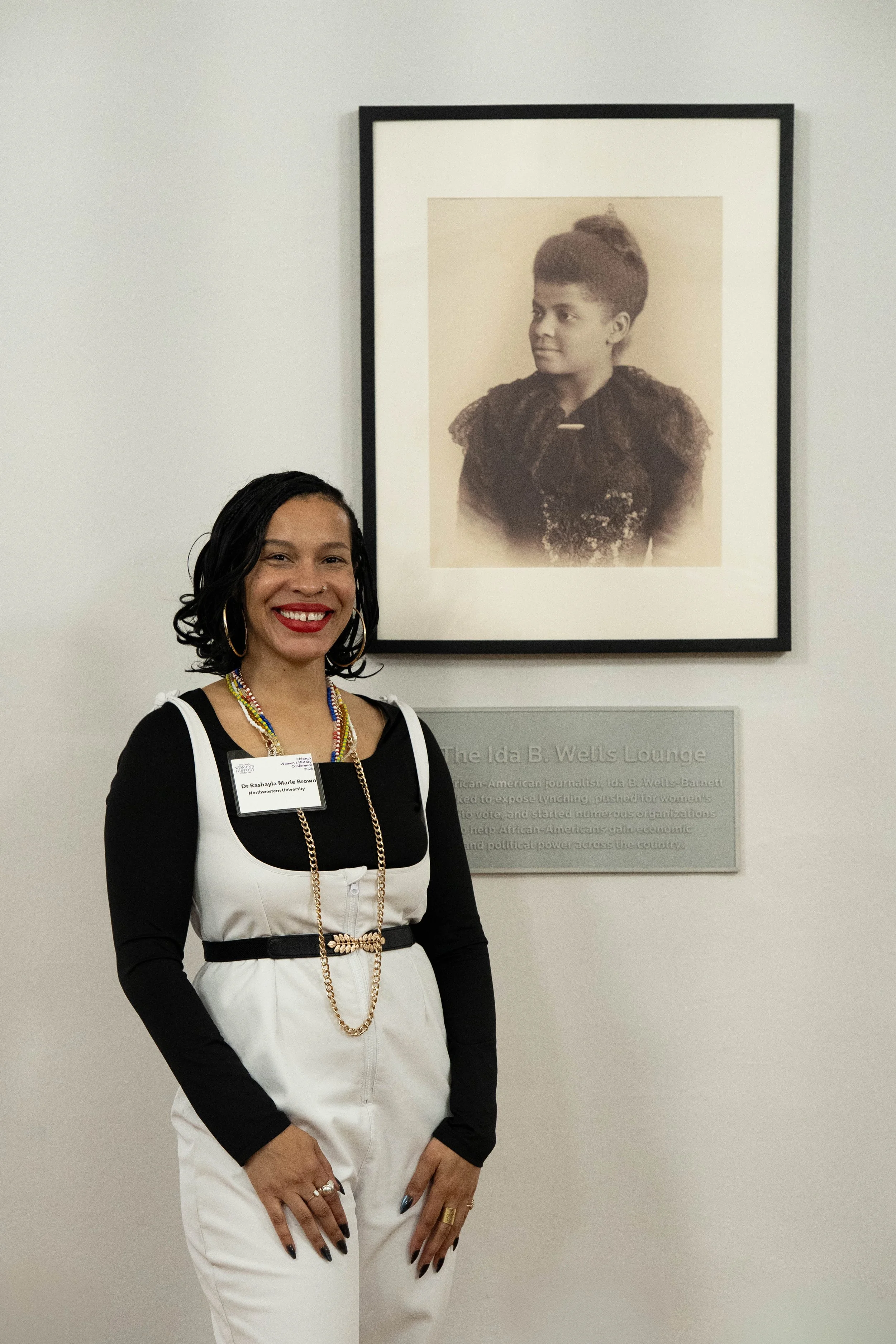
Dr. Rashayla Marie Brown photographed next to Ida B Wells’s photo, in the Ida B Wells Hall at Roosevelt University where Dr. RMB gave the Keynote Presentation.
Photo credit Essence Richardson
Another throughline of the keynote speech was the concept of wholeness in health, and at the beginning of the presentation RMB encouraged us to take a moment to reframe how we conceptualized a “healthy” life or status. She pointed out the etymology of the word heal as meaning “to make whole” and challenged the idea that health issues must be fixed or repaired in order to make one whole, instead emphasizing that we are all already whole, and health justice can function as a way to improve our conditions as opposed to trying to improve ourselves as people.
Turning back to her own mental health, RMB provided a new framework through which she reenvisioned the acronym “CPTSD” (complex post-traumatic stress disorder), a condition she was diagnosed with in her youth. By creating a new acronym for it, she shifted her view of CPTSD, seeing it as a way to reflect on central themes in her life rather than a disorder that defines her past, present, or future.
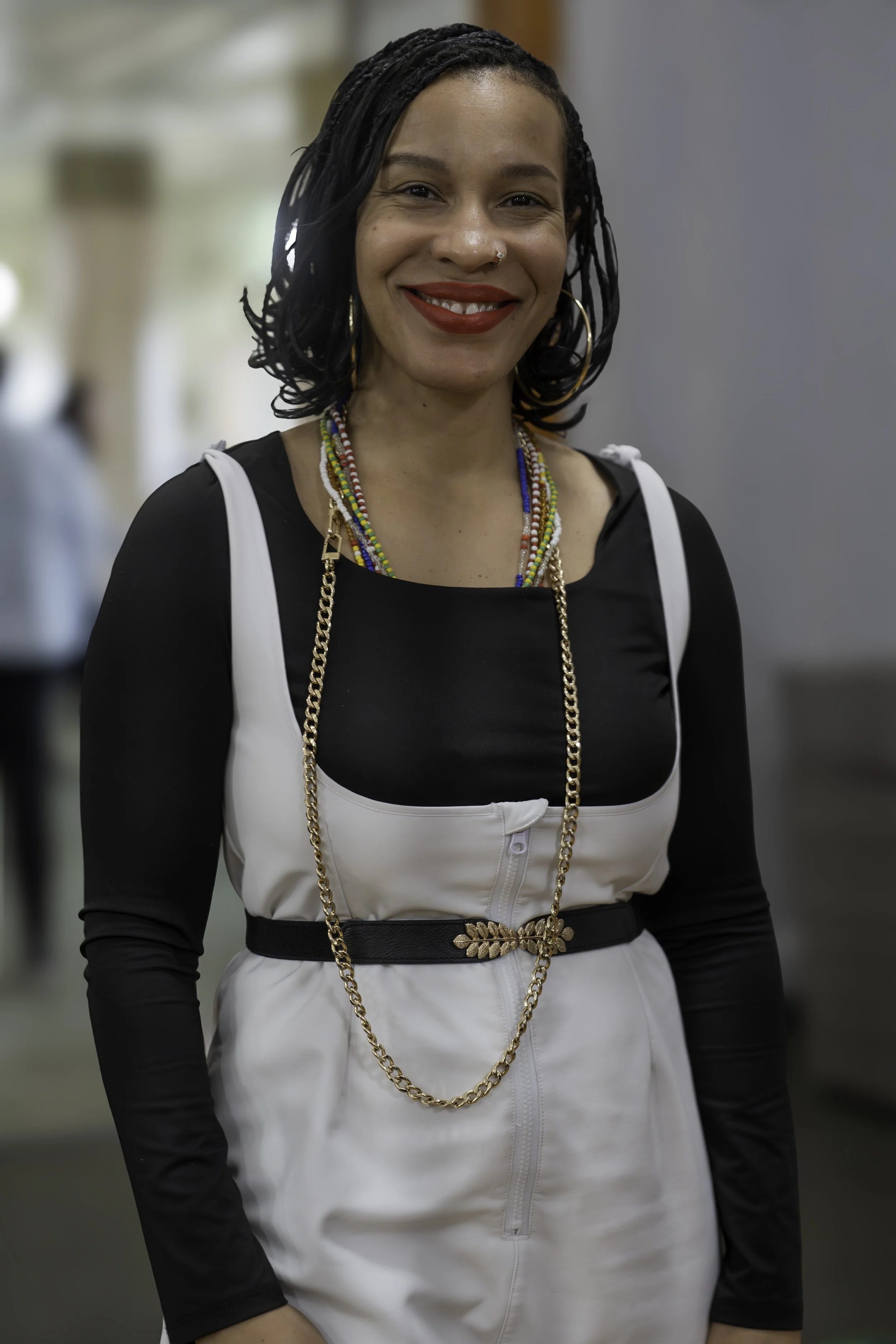
Keynote Presenter:
Dr. RMB at Chicago Women’s History Conference 2026
Photo credit Diana Solis
The reenvisioned acronym stood for “Courage, Partnership, Tragedy, Storytelling, Decision,” and each of these words was displayed onscreen for the audience to consider. As RMB shared anecdotes from her life that related to the acronym, I began to better understand why she felt the need to reclaim and reimagine CPTSD, not only for her own sake, but for the collective good. The “P” stood out to me as perhaps the most urgent tenet, given the current historical moment, and RMB emphasized this critical need for solidarity as well. “Partnership,” she said, “means that I’m going to reach across the aisle to somebody who has no personal investment in my outcomes—because they perceive themself as outside of my community—and think about ways that we can connect.” As an aspiring historian with a deep commitment to compassion and empathy, this quote has really stuck with me. There are always countless ways that any of us can connect with one another—all we need to do is look for them.
As the presentation came to an end, RMB performed an original piece of music, blending together recordings and live vocalizations where she recited the names of many women in her family. The refrain “you are already whole” played in between these names, again reminding the conference attendees to reconsider the many meanings of “health” as we moved forward with our day to learn about many different aspects of women’s health justice. “Wholeness is not something we have to strive for,” RMB concluded as the rhythmic vocalizations faded out. “It is just something we have to remember.”
by Rachel Lawson, Scholarship attendee