Rachel Lawson on Nursing and Women’s Health Histories Through Black Archives
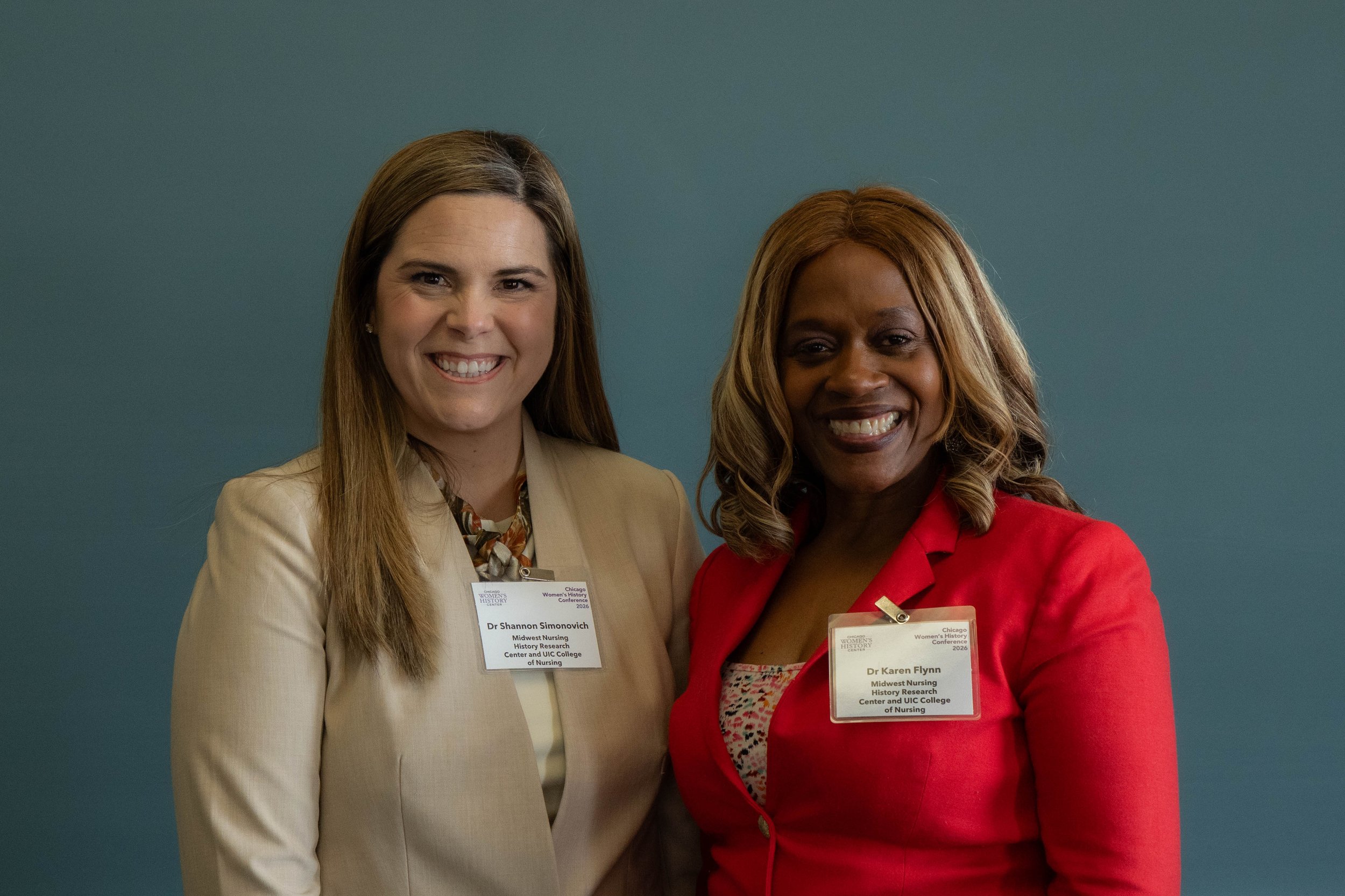
Presenters: Dr. Shannon Simonovich and Dr. Karen Flynn, Photo credit Essence Richardson
The first panel I attended at the 2026 Chicago Women’s History Conference was entitled “Transforming a Center: Nursing and Women’s Health Histories Through Black Archives and Community Memory,” and it was led by Dr. Karen Flynn and Dr. Shannon Simonovich from the University of Illinois at Chicago’s Midwest Nursing History Research Center, or MNHRC. The panel covered many topics related to nursing, but I was most interested in the historical aspect of Black women as nurses in the United States and the Midwest in particular. While many people might imagine the American South as being “more racist” than the Midwest, both historically and in the present day, Dr. Karen Flynn emphasized the reality that Chicago was often just as unsafe for and unwelcoming towards Black nurses as many major cities in the South during the early twentieth century. In fact, she drew our attention to Dr. Martin Luther King, Jr.’s often quoted observation of the city’s reaction to Civil Rights protests: “I’ve been in many demonstrations all across the South, but I can say that I have never seen, even in Mississippi and Alabama, mobs as hostile and as hate-filled as I’m seeing in Chicago.” So although many Black people moving north saw Chicago as a sort of “promised land,” there were still many restrictions in place, which Dr. Flynn referred to as “covenants,” that prevented them from owning property and entering schools or the workforce, not to mention the daily societal discrimination and violence. This was especially true for Black nurses in the city. During the panel, we also learned about some of the ways that Black nurses were disadvantaged when it came to both their education and their experiences working in healthcare, if they were able to make it that far. Dr. Flynn pointed out that Jim Crow era segregation laws had a huge impact on Black women’s ability to even receive a formal nursing education: many nursing programs in the Midwest admitted only two students per year, and they used this as an excuse to discriminate against Black applicants. Because the students would be roommates for the duration of their education, programs refused to admit one Black student and one white student, citing the illegality of interracial housing arrangements and ultimately only admitting white students.
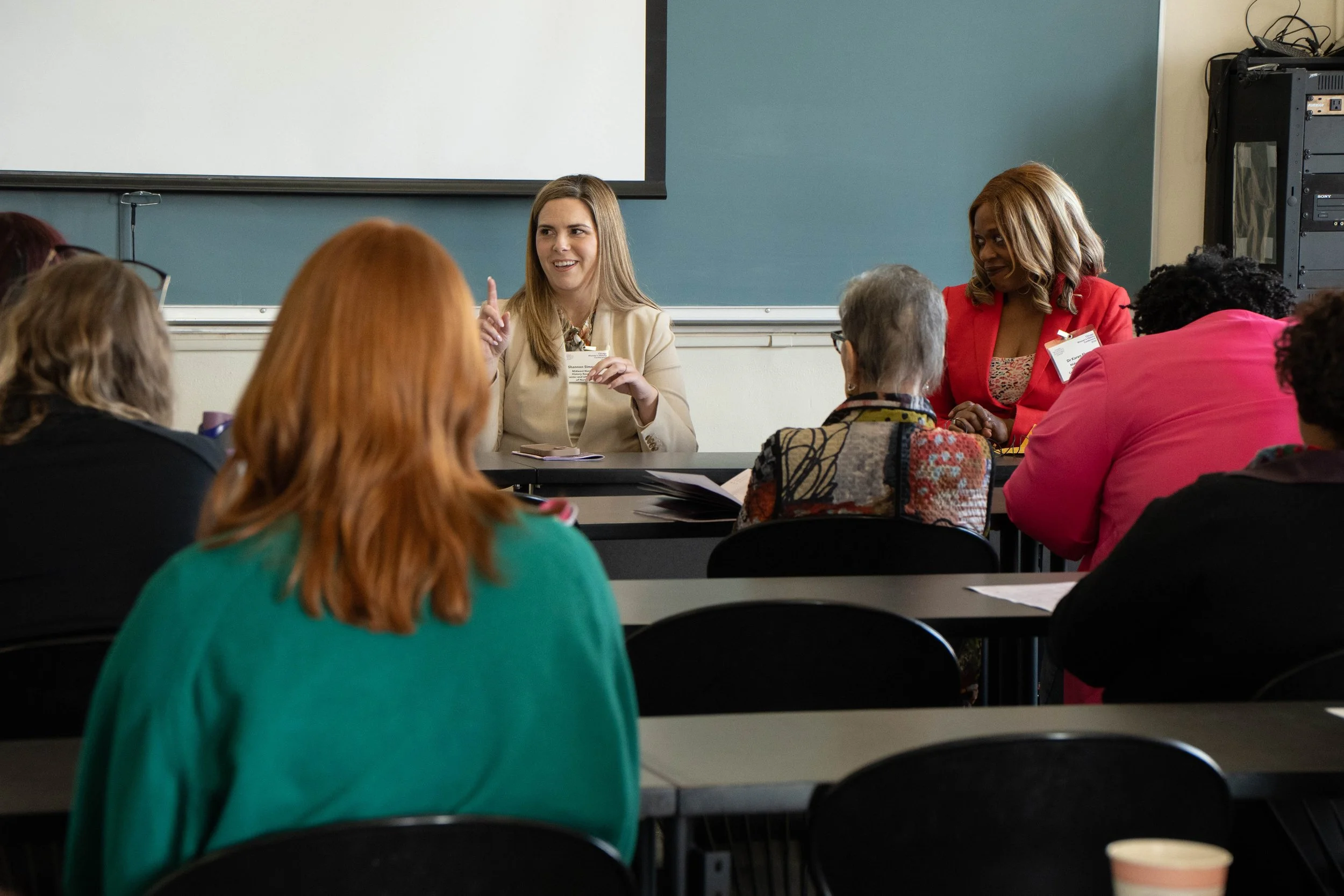
Dr. Shannon Simonovich and
Dr. Karen Flynn
Photo credit Essence Richardson
Without the ability to attend established nursing programs, Black nurses sought ways to develop their own healthcare systems, and with the help of Dr. Daniel Hale Williams, established Provident Hospital in Chicago in 1891. It was the first non-segregated hospital in the country. This was an important milestone in Black nursing history, but the underlying racism of the system as a whole went largely unaddressed, and Dr. Flynn and Dr. Simonovich are still working to change the racial landscape of nursing today. In order to make progress as we move forward, they emphasized, we must better understand the past. You can learn more about the MNHRC’s project, Mapping Care: The History of Black Nurses in Chicago here.
by Rachel Lawson, Scholarship attendee