From “Suffs” to “Shall Men Vote”: Discovering a Chicago-area Suffragist
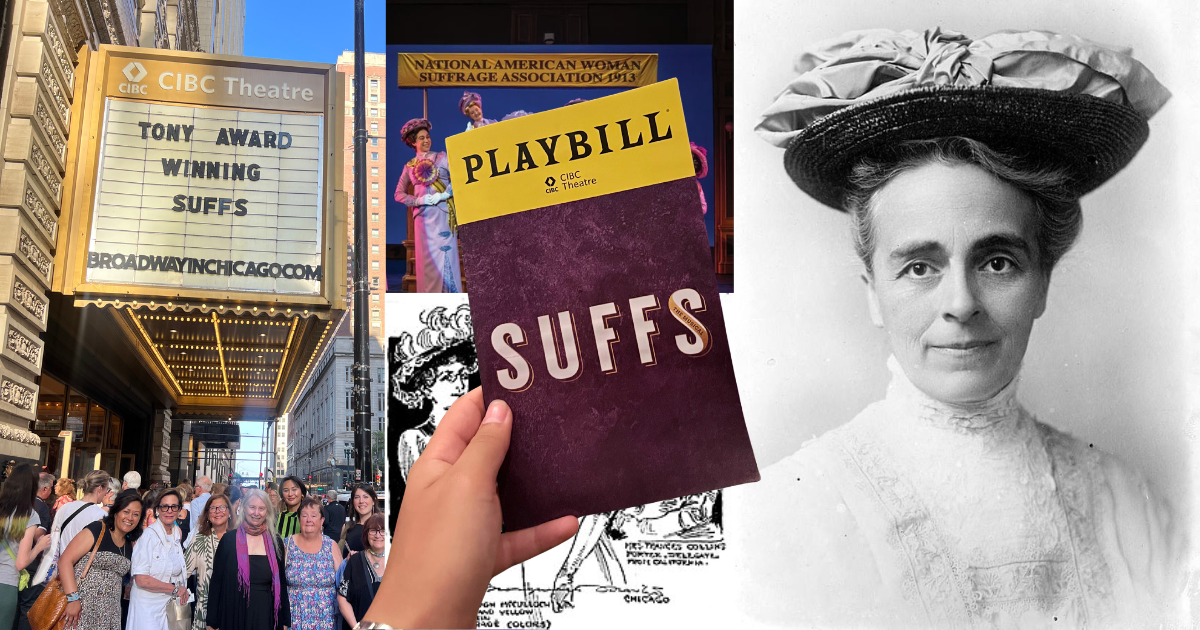
After seeing Suffs the musical with the Chicago Women’s History Center a few weeks ago, I was hungry to learn more about the suffragists, their strategies, and their lives. Having grown up in Chicago all my life, I was particularly interested in any local suffragists whose individual stories may have been omitted from the musical. This is why I was thrilled to attend the CWHC’s most recent virtual event, “Power From Knowing: Lessons from Suffs in Illinois.” The talk prominently featured Dr. Gwen Jordan, a legal historian who specializes in the history of women lawyers and their social justice activism as well as issues of gender, race, law, and critical race theory.
Jordan’s lecture followed the history of the Illinois battle for female suffrage and the development of women’s legal rights. Jordan began at coverture, the pre-colonial system that the United States inherited from Britain. Under coverture, married women had no independent legal existence from their husbands. Married women’s husbands controlled their wives’ property, children, and their very bodies. Husbands had the right to chastise, or beat their wives, so long as the stick they used was no larger than their thumb (the “Rule of Thumb”). Additionally, it was legally impossible for husbands to rape their wives due to the marital rape exemption. Once a bride said “yes” at the altar, she legally said “yes” for the rest of her life. Learning about coverture made it all the more impressive that the suffragists were able to succeed, and all the more chilling how many right-wing figureheads and even some women yearn to go back to a similar system.
Knowing this historical background made the bulk of Dr. Jordan’s presentation all the more inspiring. Dr. Jordan mainly focused on one hidden figure – Catharine Waugh McCulloch (1862-1945). Catharine McCulloch was one of Carrie Chapman Catt’s (of NAWSA and Suffs fame) closest allies. McCulloch became a lawyer when there were less than 200 women lawyers in the country, joining the Illinois Bar Association in 1886. Her advocacy in lobbying the Illinois legislature was essential to making Illinois the first state east of the Mississippi River to grant women presidential suffrage – a victory which would prove fundamental to other states, who modeled their suffrage campaign after McCulloch’s. Despite her undeniable influence, McCulloch is barely talked about, her name only recognizable to legal historians and her legacy almost entirely erased. Even McCulloch's great-granddaughter, Ann McCulloch, only discovered her ancestor’s historical significance when she actively sought it out. On the Zoom call, she shared: “I knew there was a McCulloch park, but I did not know about my great-grandmother until I was 40.” Blood connections, too, are subject to the same erasing power that so much of history is shaped by.
As Dr. Gwen Jordan importantly pointed out, history is under attack today because it is powerful. There is always work to be done to ensure that vulnerable histories are not forgotten or maliciously rewritten. To ensure Catharine McCulloch’s story is told, Susan Hope Engle, Ann McCulloch, and others are collaborating on the 90 minute feature documentary Shall Men Vote?, named for the title of one of McCulloch’s most iconic suffrage speeches. In it, she hilariously flips the anti-women’s suffrage arguments of the time onto men: “Really gentlemen, I have my doubts whether your sex as a whole has the intellectual strength necessary for voting.” The documentary is to be finished early 2027, but they need more support to get this story to as large an audience as possible. Find out more about how you can help tell Catharine McCulloch’s story at shallmenvote.com.
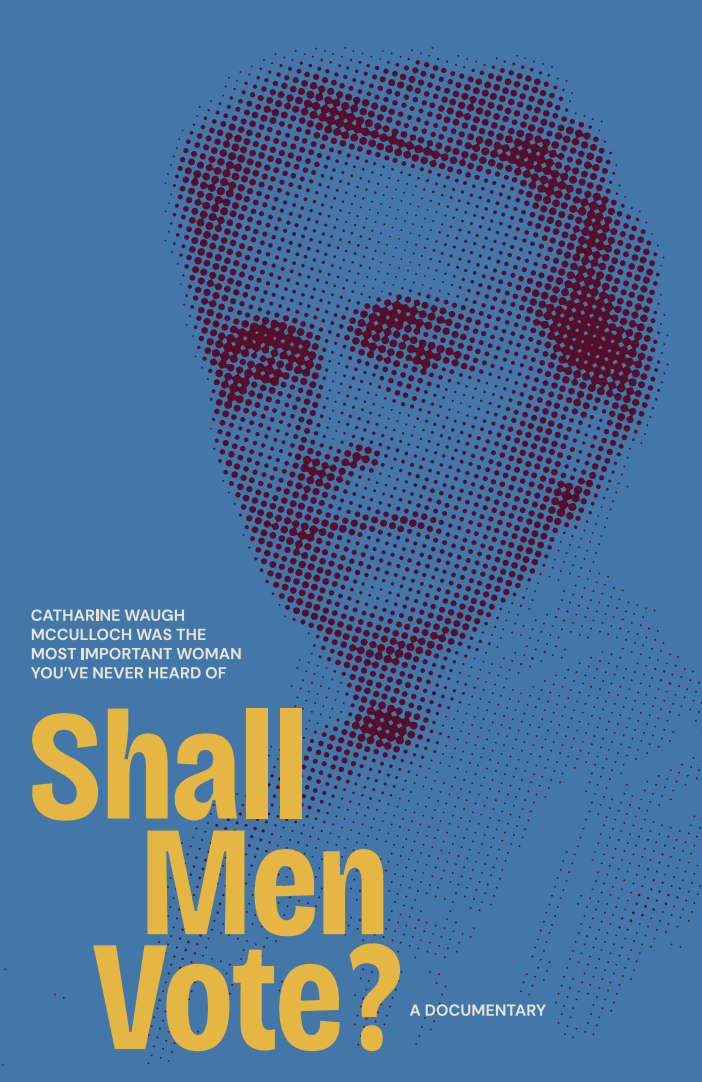
Movie poster for Shall Men Vote?, a documentary about Catherine Waugh McCullogh to be released early 2027.
Article by Sofia Pavkovic, CWHC Summer Intern
August 6th, 2026
